

10 Days
US$

Duration

Trip Difficulty
Easy

Max Altitude
5,000m / 16,404ft

Activity
Tour

Destination
Tibet

Group Size
2-16 People

Accommodation
Hotel, Guest houses stay BB Basis

Meals
Breakfast, Lunch, Dinner

Transportation
Car & Bus
Highlights of Mount Kailash Overland Tour
- A relaxing road journey along the outstanding mountain route of northern Nepal and Tibet
- Observe the rich Buddhist culture, heritage, and tradition of Nepal and Tibet
- Opportunity to take a spiritual bath with Lake Mansarovar water to clan your spirit, body, and mind
- Performance of Yagya, Pooja, and Havan on the shore of the sacred Lake
- A three-day parikrama around Mount Kailash getting rid of past sins
- Kailash Northern face Darshana
- An easy trek with the assistance of horses, yaks, and porters
- Soak in the peaceful ambiance of the Kailash and Mansarovar
Itinerary of Mount Kailash Overland Tour
Day 01: Kathmandu to Nepal-Tibet Border at Rasuwa Ghadhi7-8 hours 145 km
Har Har Mahadev! From today, our sacred journey of Mount Kailash overland tour commences. Our Nepali guide will receive us at our hotel and take us in a jeep towards the Nepal- China border at Rasuwa Gadhi.
The initial drive along the graveled Highway of Pasang Lhamu next to the babbling waters of Trishuli with the eternal snow of the Himalayas is something to register for life. The Trishuli Bazaar arrives in no time where there are numerous charming settings to eat our lunch and purchase some snacks for the way.
Now, the jeep will take us to the rural habitats of Rani Pauwa and Dhunche. The travel route blesses us with the seducing spectacle of the Annapurna, Manaslu, and Ganesh Himal.
After another hour’s drive downhill, we will arrive at Syabrubesi. For many, the village serves as the overnight stop but we will continue further towards Timure and Ghatte Khola.
The Nepal Immigration Office will then inspect our passport and Visa after which we will drive for another 15 minutes along the delighting Friendship Highway to Rasuwagadhi.
The itinerary cut short our traveling hours for tomorrow and will give us more time to acclimatize to the Tibetan environment.
Activity & Duration
7-8 hoursHighest Altitude
4378m (Tibet)Meals
BreakfastAccommodation
Guest HouseDay 02: Cross the Nepal-Tibet Border and Drive to Kerung (2,700m) 2-3 hours 45km
After breakfast, we will proceed to cross the border between Nepal and Tibet. At the border, the Chinese authorities will carefully inspect our permits and visas individually. Our Tibetan guide will be waiting on the other side of the border with our Tibet Travel Permit ready for inspection.
He will help us complete the necessary procedures. It is now the time for our Nepali team to leave us and entrust us to the capable hands of our Tibetan guide. After a warm welcome, he will transport us in a private bus or van towards Kerung.
The 2-hour road is fast and efficient taking our breath away with the amazing vistas of Tibetan Highlands. Slowly, we will go to our hotel, and the rest of the day we will spend with acclimatization and a quiet walk.
We can take a look at the famous Pakpa Gompa which was built around the 7th century AD. In the monastery, we can witness the beautiful sculpture of Nepali princess Bhrikuti mar ried to a Tibetan Emperor.
In the colorful streets of this small town, we can find numerous Indian, Tibetan, and Nepali restaurants where we can dine for a tasty meal.
Activity & Duration
2-3 hoursHighest Altitude
2700m (Kerung)Meals
BreakfastAccommodation
Kyrong Puntsok Rase HotelDay 03: Drive from Kerung to Saga (4,450m) 160 km 5-6 hours
Starting our road journey, we will drive through the pretty barley fields which shortly rise into the mountains taking us to the lofty Thong La and La Lung Passes. Continuing on, we will arrive at the magnificent alpine lake Peiku Tso.
Along the long yet delightful travel, we may stop at the temple constructed at the location of Milarepa Cave and take some time to explore the area. We will then travel across the bridge over Brahmaputra River and arrive at Saga in the early evening.
Locally translated, Saga means HAPPY LAND which serves as the most important stop for pilgrims on their way to Mount Kailash overland tour.
Activity & Duration
5-6 hoursHighest Altitude
4450m (Saga)Meals
BreakfastAccommodation
Saga Qiangkyebu HotelDay 04: Drive from Saga to Lake Mansarovar (4,590m)465 km 7-8 hours
We are again going on an incredible drive, a driving expedition of the rare kind. We will drive slowly towards the area of the source of the Tsangpo River in the Old Dzongba area past the Dargyeling monastery.
After some drive on the plateau, we will arrive dusty and tired at Paryang. However, we still have to progress through the dunes toward the Horchu River. Here, the base of the Chinese Military will once again verify our permits after which we will cross over the imposing 5211 m high Mayumla Pass.
We will travel for an additional two hours before reaching the enchanting Lake of Mansarovar, affording us our initial glimpse of the magnificent Mount Kailash.
We are now far out in the countryside and the quality of the accommodation decreases. But the experiences are in an absolutely special class.
Activity & Duration
7-8 hoursHighest Altitude
4590m (Lake Mansarovar)Meals
BreakfastAccommodation
GuesthouseDay 05: Explore Lake Mansarovar and Drive to Darchen (4,575m) 40 km 2- 3 hours
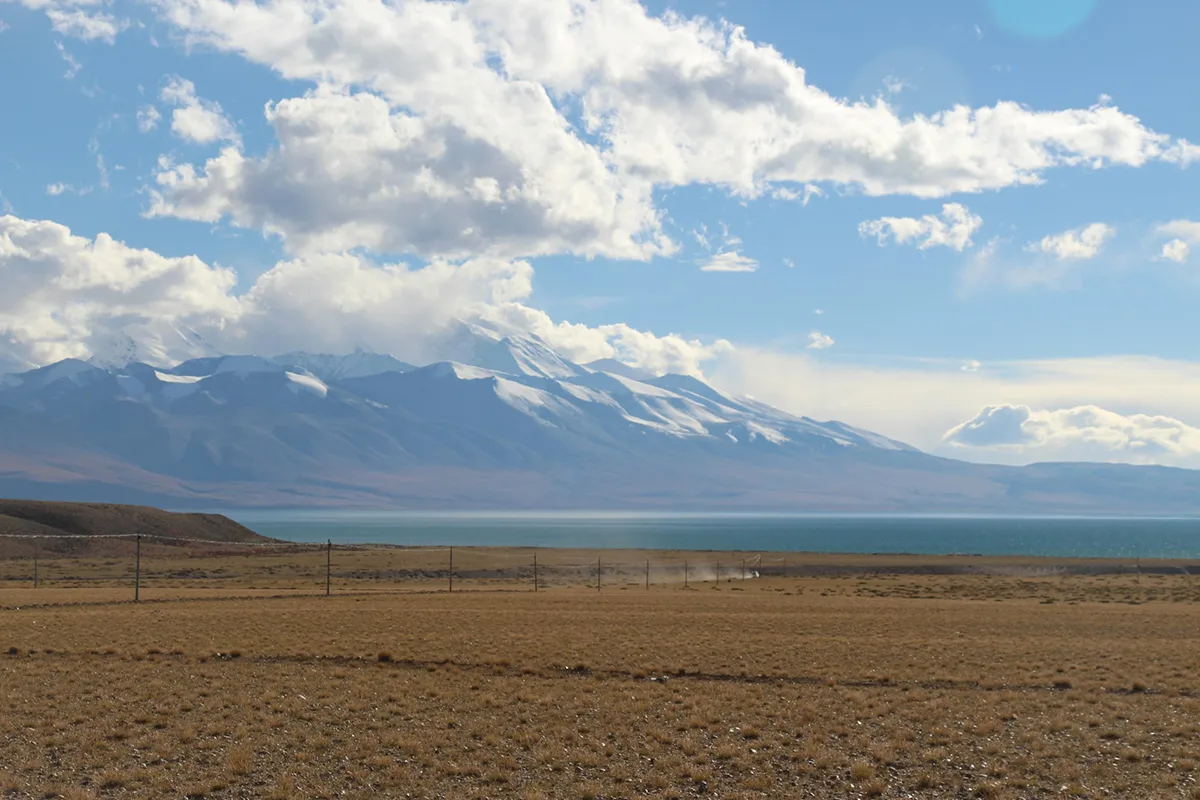
Today we have a whole day to explore the Lake Mansarovar associated with the power of light symbolizing the maternal aspect. Rakshas Tal adjacent to the Lake is associated with the forces of darkness and popular lore considers it poisonous. The Lake is encompassed by Mount Kailash, Chiu Monastery, and Gurla Mandhata (Swastika Mountain).
But first, we will take a ceremonial bath in the waters of the Lake and conduct Yagya, a pooja ritual on the lake’s shore for the eternal salvation of our departed ancestors. Direct bathing in the lake is prohibited so we will fill our bucket with the water. Bathing with its water is thought to cleanse our minds, absolve sins, and guide us towards Nirvana in the afterlife.
Then, we will move on to visit the Chiu Gompa at 4530 m, probably the most active in the area.
Besides the ritual ceremony, the lake is also home to rare species of birds thus a paradise for ornithologists.
Now, we will proceed to Darchen serving as the commencing point of the 53 km pilgrimage trek around Mount Kailash. After covering the 40 km distance in about 2 to 3 hours, we will be at Darchen where we will settle for the night.
Later, our guide will provide us with detailed information regarding the three-day Kora pilgrimage that is set to commence the following day.
Note
There is no requirement for you to personally carry your belongings. Local porters are available to help you with the luggage and if you are unable to walk around Kailash due to health reasons, you have the option to rent horses or yaks.
If you wish to utilize their services, kindly inform our guide this afternoon, as making advance reservations is crucial, especially during the busy season of the Mount Kailash Overland Tour.
Activity & Duration
2- 3 hoursHighest Altitude
4575m (Darchen)Meals
BreakfastAccommodation
Castal HotelDay 06: First Day of Kailash Parikrama, Drive to Yamadwar, (4,740 m), 30 minutes, and trek to Dirapuk (4,900m) 18 km, 6-7 hrs.
Our highly awaited Kailash Kora or Parikrama begins from today. Early morning, we will drive by bus towards Yamadwar for about half an hour from where the Kailash Parikrama commences in a clockwise direction.
The Yamadwar for Hindus and Tarboche for the Tibetans, this gateway is believed to be secured by the deity Yama. He is the firstborn son of the Sun god and is revered as the God of Death. According to the lore, only pure souls with sincere hearts can traverse through this Gate. In the annual Saga Dawa Festival, fresh prayer flags are hung on the gate by the locals.
The historic sky burial location is also in close proximity, where numerous colorful prayer flags are spread out resembling a vast ocean wave.
After passing through the Gate, our journey will lead us through the tight and vertical canyon of the Lha Chu Valley until we arrive at the Dirapuk monastery.
The sacred grand northern face of Mount Kailash emerges in front of us at the monastery. Along with beholding Mount Kailash, we will also see the majestic sight of the bewitching Kangkyam glacier.
We will sleep in the modest and traditional hostel-styled guesthouse of the Gompa with a basic Tibetan meal for the night.
The cleansing of our inner being and the commencement of our spiritual quest has begun form today.
Note
At Yamadwar, you will be met by the porters, yaks, or horses whose services you have hired the previous day. It is important to note that the expenses associated with renting a yak, porter, or horse are not included in the total cost of the expedition.
Activity & Duration
30 minute and 6-7 hrsHighest Altitude
4900m (Dirapuk)Meals
BreakfastAccommodation
GuesthouseDay 07: Trek from Dirapuk to Zuthulpuk (4,850m) via Dolma La Pass (5,645m) 22 km 7-8 hours
Today is the second day of Kailash Parikrama which will present us with the most demanding hike of our Mount Kailash overland tour. We will rise at the break of dawn and advance on our route.
We will walk across multiple glacial streams originating from the northern side of Kailash. The route then follows the crossing of the Jarok Donkhang from where the track now rises sharply towards the revered Shiva Tsal burial ground (5330 m).
The Tibetan pilgrims often discard their blood drops, old garments, or any other old material symbolizing the casting off of their previous existence and the rejuvenation of their spirit in the divine universe. We will also shed our old items and march to vertically climb the Dolma La Pass.
A fascinating site of massive prayer flags meets us at the top of the Pass. The Pass is regarded as the sacred abode of Goddess Tara/Dolma who is venerated by the Hindus as the divine Goddess Parvati.
We will now sharply climb down from the Pass to Gauri Kunda Lake, also recognized as Tso Tuksche (5608 m). We will immerse in its water for our spiritual purification.
Another sharp downward climb will guide us to the Axe of Karma, a symbolic place where we rid ourselves of negative karma. Following the lofty route, we will arrive at Zuthulpuk monastery.
This day signifies our triumph over negative karma, opening the path for spiritual renewal.
Activity & Duration
7-8 hoursHighest Altitude
5645m (Zuthulpuk)Meals
BreakfastAccommodation
GuesthouseDay 08: Complete Kailash Parikrama and Drive to Saga 8 km on foot after 7-8 hours’ drive
Our holy Kailash Parikrama will conclude today. A relatively simple walk lasting around two hours will guide us to Chasang through Barkha Plain on the outskirts of Darchen. Along the path, we will encounter a line of hand-carved Mani Walls and a group of other Yatris.
At Darchen, our designated driver will take us to Saga along the familiar path where we will once again have darshana of Lake Mansarovar.
Activity & Duration
7-8 hours’ driveHighest Altitude
4450m (Saga)Meals
BreakfastAccommodation
Saga Qiangkye Bu HotelDay 09: Drive from Saga to Kerung 160 km 5-6 hours
We will set off on our return journey to Kerung, driving along the well-known scenic route that offers splendid views of Shishapangma and the captivating Lake Paiku Tso (4591m).
After driving for approximately five hours, we will arrive at the cozy lodging in Kerung town, where we will have our last meal with our dedicated Tibetan crew.
Activity & Duration
5-6 hoursMeals
BreakfastAccommodation
KyrongPuntsokRase HotelDay 10: Travel to Kathmandu by car from Kerung 6-7 hours
Once again at Kerung, we will go through some formalities followed by a final wave to our Tibetan guide. Our friendly Nepali crew will receive us and drive us through Syabrubesi towards our accommodation in Kathmandu.
Contemplate what you have just achieved and feel the pure energy flowing within. In the evening, you can take a lively walk through the illuminated streets of Basantapur.
Activity & Duration
6-7 hoursHighest Altitude
1400m ( Kathmandu)Meals
BreakfastEssential Information of Mount Kailash Overland Tour
Best Season
Unlike other regions of Tibet, the visit to the Ngari region of Tibet where Kailash is perched should be avoided in winter (Late October to February). The winter months in Ngari bring a harsh climate with cold temperatures, high- velocity winds forcing the locals to close their accommodation in the Kailash region.
The optimal time therefore to undertake the Mount Kailash overland tour is April and June when the weather is perfectly dry, stable, and sunny as the severe winter already subsided providing the delightful temperature between 20 to 21 degrees Celsius during the day and 7 to 9 degree Celsius at night.
During this time of year, the annual Saga Dawa Festival also takes place in Kailash. It is a time when Tibetans replace the old prayer flags and adorn the gate of Yamadwar with fresh, vibrant lungtas.
The monsoon months of July and August receive minimal rainfall about 22 mm per month. The light rain shower in fact makes the Kailash parikrama yatra more convenient and delightful.
The other favorable period is September and early October as the summer ends and rain decreases. The rich green color paints the otherwise red dry sandy feature of Kailash. The climate is sunny and clear with the verdant view of the sacred peak. The temperature often dwells around 8 to 9 degrees Celsius.
Overall, the period from May to early October presents the ideal opportunity for the Mount Kailash overland tour. The new moon during these months is also considered auspicious, as pilgrims believe that undertaking the Kailash Kora during the new moon can absolve the sins of their past 100 lives.
Weather and climate
The Ngari district is a high-altitude region of Tibet that experiences colder temperatures throughout the year averaging 0 degrees Celsius. However, with climate change, a variation in the average temperature has been observed at present.
The approximate daytime temperature often fluctuates between -12 to 15 degrees Celsius while the summer months often experience the highest temperature of 32 degrees Celsius. On the other hand, the winter month of January often brings the lowest temperature of even -36 degrees Celsius in Kailash. Winds are also a regular occurrence in the region, with average speeds of around 13 km/h during winter and gusts reaching up to 32 km/h.
Difficulty
The Mount Kailash overland tour is a literal test of strength that is categorized under the tough and rigorous expedition in Tibet. It is because of its lengthy duration and extensive travel, along with the quick transition to higher altitudes in a matter of few days. With elevation changes ranging from 4500 m to 5600 m near Kailash and Lake Mansarovar, a considerable amount of physical and mental endurance is necessary.
At such high elevations, there is a notable difference in temperature between night and day. While the sun shines brightly with intense heat, the night can bring significant clouds, wind, and bone-freezing temperatures. Sometimes, the sporadic snowfall can also happen for a short time.
In addition, the basic dormitory-styled night accommodation from Darchen to Zuthulpuk can make your night sleep quite discomforting. In the busy Kora season, you may have to sleep in the tents on the ground of the monasteries which can be tedious for female travelers.
However, we have previously highlighted that yaks, porters, and horses are easily accessible to facilitate your Kora. If you are determined for the Kailash Darshana and have mentally and physically prepared to sacrifice comfort and luxury for just two to three days, the Kailash Overland tour will prove to be an extraordinary journey of a lifetime, allowing you to reestablish the forgotten connection with the Higher Spiritual realm.
Altitude Sickness
The Ngari air is thinner and contains less oxygen with different air pressures that can cause a drop in oxygen level in your blood resulting in altitude sickness.
The body needs time to adapt to a new environment, a process referred to as acclimatization. During our Mount Kailash Overland tour, you will experience a significant altitude change from 1350 m in Kathmandu to 4450 m in Saga in just three days. To help you acclimatize effectively, we have included a rest day after reaching 2700 m Kerung before proceeding to Saga.
Even with adequate preparation and acclimatization, some of us may suffer from issues like shortness of breath, headaches, nausea, vomiting, sleep disruptions, weakness, and rapid fatigue.
The most effective way to prevent this condition is to drink a significant amount of water, preferably double the usual amount. You can also carry an adequate supply of paracetamol to alleviate any discomfort from headaches. When trekking at high altitudes, it is best that you proceed slowly and with caution.
Avoid heavy exertion in the first few days to adjust to the altitude. Refrain from consuming alcohol, smoking, or taking sleeping pills. Our guide carries Diamox tablets in his first aid kit to assist with your acclimatization.
So inform our guide about your condition so that he can provide appropriate assistance. Additionally, the nuns and monks at the monasteries will also offer support if you experience altitude sickness.
Accommodation
At Rasuwagadhi, we will organize the finest guesthouse accommodation for your overnight stay. Once we cross the Nepal-Tibet border, you will rest in a cozy guesthouse in Kerung. As the Kailash tour commences from the Tibetan Highlands, our Tibetan guide will arrange the finest standard tourist hotels ensuring rooms with your own bathroom, hot showers, and air conditioning. We will also make sure the hotel is equipped with an oxygen supply.
Saga will be the last town that facilitates your comfortable stay with amenities of internet and communication. Beyond Saga though, the lodging options will be typically basic guesthouses with hostel-style rooms equipped with 4 or 5 beds. During peak seasons, camping in tents at Dirapuk, and Zhutulpuk may be necessary.
Meals
Throughout our Mount Kailash overland tour, a vegetarian breakfast will be provided, with lunch and dinner being at your own expense. In Nepal, you can enjoy a variety of breakfast options such as potato curry, chapati, beans, bread, samosa, and sel roti.
The approximate meal price in Nepal and Tibet ranges between $25 to $30 per person per day. Kerung and Saga towns offer a selection of restaurants serving Chinese, Tibetan, Indian, and Nepali cuisine.
From Darchen onwards, basic Tibetan food will be available, including fried rice with vegetables, Tibetan soup noodles, potatoes, and Chinese fried vegetable dishes. Additionally, tent tea houses provide hot water for preparing instant noodles, and various types of tea( butter tea, salted tea, milk tea) are readily available.
Transportation
At the beginning of the journey, a private jeep will transport you to Rasuwa Gadhi and Kerung. After entering Tibet, a comfortable private bus or van will transfer you to your hotel and provide transportation to other Tibetan towns according to our planned itinerary.
As the trip concludes, the same mode of transportation will take you back to Kerung, where our jeep will pick you up and drive you back to Kathmandu.
If you like to abstain the lengthy road trip, a helicopter flight from Timure can also be added but an extra fee.
Flight Information
One of the other options for undertaking the Mount Kailash overland tour is via Lhasa from Nepal. By selecting this route, you can stay away from the long road travel via the Nepal-Tibet border.
Instead, you can engage in a comfortable flight from Kathmandu to Lhasa, which only takes approximately 2 hours. This alternative route enables you to spend 2 leisurely days in Lhasa, where you can also walk around and spend time in the stunning attractions of the Tibetan capital.
If you decide to fly from Kathmandu to Lhasa, then you can choose the service of Himalayan Airlines which operates the three direct Kathmandu Lhasa flights on Mondays, Wednesdays, and Fridays.
However, boarding Kathmandu Lhasa flights on Sundays, Tuesdays, Thursdays, or Saturdays may need you to make a transit to Chengdu.
Travel Insurance
According to our travel conditions, you must take out travel insurance for our Mount Kailash overland tour. If you have not yet taken out travel insurance, you are obliged to arrange this before departure. If something unfortunate happens during the trip, this can cause a lot of expenses on our part.
By taking out insurance, you can avoid high costs. Make sure to specify to your insurance company about the nature of your trip and seek for a special package that offers travel and cancellation insurance along with medical and health expenses, and emergency evacuation.
Physical fitness and health
Good physical and mental health is a prerequisite for participating in our Mount Kailash overland tour. Experience with long or high-altitude treks is not necessary for our trip to Kailash. However, it is important to be physically and mentally prepared for the three-day walk around Kailash, particularly as the second day includes crossing the imposing 5645 m high Dolma La Pass.
You can regularly take challenging walks before leaving for Kathmandu. You can enhance your muscle endurance, stamina, and strength through activities like swimming, biking, walking, jogging, running, or trekking in mountains or hills.
Walking 10 to 15 km daily for half an hour or choosing stairs over an elevator can also contribute to your physical fitness. Additionally, mental strength is significant for overcoming unforeseen challenges during the trip, so make meditation or Yoga practice a daily part of your routine.
Communication and Network
When in Nepal, you can opt for either NCELL or NTC SIM cards for communication, both of which offer a dependable network across the country. Once you cross the border into Tibet, our Tibetan guide can help you purchase local Chinese SIM cards from China Unicom, China Telecom, or China Mobile, all of which provide 5G service for fast mobile internet. Remember to submit your passport and photo to obtain the SIM cards.
In Nepal guesthouses, WIFI connections are available at an extra fee, and in Tibet guesthouses and hotels, WIFI access can be found in the hotel lobby and deluxe rooms.
Unfortunately, access to Western websites such as Google, Gmail, WhatsApp, Instagram, and YouTube is blocked in China. But don’t worry, you can easily resolve this by using the eSIM with a preinstalled VPN or downloading a VPN app on your mobile or laptop.
Currency
Tibet, as a region of China, uses the Chinese Yuan (RMB) as its local currency. During our Mount Kailash overland tour, we will pass through the towns of Kerung and Saga, where foreign currency exchange services may not be readily available.
While there are some banks in these towns where you can exchange your currency for Chinese Yuan, due to their smaller size, the service may not be easily accessible. Therefore, we recommend exchanging your national currency in Kathmandu through banks, foreign currency exchange counters, hotels, or TIA.
The Everest Bank, Nabil Bank, Himalayan Bank, Nepal SBI Bank, and Standard Chartered Bank also offer foreign currency exchange services. Since we will be traveling in remote areas of Tibet where only cash is accepted, we advise you to carry the necessary cash for the entire trip.
What to expect?
The Mount Kailash overland journey is truly an experience that enables you to have a spiritual rebirth emerging free from all sins. In the initial leg of the journey, you will traverse the majestic landscape of Nepal adorned by the dazzling Himalayas of Manaslu, Ganesh, and Annapurna massifs.
While in Kerung, you will quickly find yourself in the Tibetan Highlands, where the vast red plateau of Tibet welcomes you amidst a religious atmosphere penetrating the air. In Saga, you will experience a slightly modernized version of Tibet, but as you journey deeper toward Kailash, the authentic Tibet will gradually unfold before your eyes.
At Lake Mansarovar, the meditative trance will spellbind you while during the walk around Kailash, you will feel the immense presence of God in every particle.
On the other hand, adventure seekers will find a thrill when overcoming the prominent Dolma La Pass while nature lovers will be surprised by the sight of rare birds gracefully spreading their wings in the vast Tibetan sky.
Overall, the Mount Kailash Overland Tour is a genuine transformative adventure that guarantees everyone receives something meaningful in return.
Visa Information
In order for you to participate in the Mount Kailash overland tour, you as foreign visitors must arrange for an organized tour, either private or group, through a licensed travel agency like us.
Since we will be entering and hiking in the restricted Ngari region of Tibet, we must also need to obtain a Foreign Affairs permit, an Alien’s travel permit, and a Military Permit besides the Tibet travel permit and Chinese Group Visa.
It is therefore important to separate at least a month for processing the permits only. Please send us a scanned copy of your passport at least 30 days before your travel date, along with a passport-size photo (51mm x 51mm) that has a white background, no glasses, and no makeup.
Please ensure that you submit a clear, complete, color-scanned copy of your passport without any parts cut off, otherwise the permit processing will not take place.
- Tibet Travel Permit
The TTP (Tibet Travel Permit) is a mandatory document needed to visit all parts of Tibet. The Tibetan Tourism Office issues the permit when applying for an organized tour via a certified travel agency. Please confirm your Mount Kailash Overland tour with us with the required payment after which we will initiate the process to acquire the Tibet Travel Permit on your behalf.
We want to notify you that once we apply for this permit, you won’t be able to change your itinerary as the details about the tour along with your name, and duration of your stay, will be mentioned in the permit. In case, you want to change the program, a new Tibet Entry Permit will need to be processed.
Once the application for the permits is approved and issued, the Tibetan travel agency will send us the invitation letter. We will present this letter to apply for your Chinese Group Visa in Kathmandu. At the Kerung border, our Tibetan Guide will be present at the Chinese Checkpost with your Tibet Travel Permit.
- Chinese Group Visa
After we receive an invitation letter from the Tibet side, we will be eligible to apply for our Chinese Group Visa after you arrive in Kathmandu. This is a single white document issued for the entire group member making all the group members enter and leave Tibet at the same time.
Once all members of our group have arrived in Kathmandu, we will proceed to the Chinese Embassy to submit our passports, photos, and fingerprints for biometric registration. Your passport will be kept for two official nights in the embassy to verify your identity.
The Chinese Group Visa can be obtained through the standard application, which usually takes 4 business days, or the express application, which takes 3 business days.
The Chinese Group Visa fees differs depending on your home country. For US citizens, the cost is $175 for a regular application processed in 4 business days, and $185 for an express application processed in 3 business days.
For citizens of other countries, standard request costs range from $70 to $170 with a processing time of 4 business days, while urgent applications range from $90 to $180 with a processing time of 3 business days.
- Foreign affairs permit
Mount Kailash is located in the Ngari prefecture classified as a sensitive or UNOPENED region in Tibet. Therefore, it is necessary to obtain a Foreign Affairs permit from the Lhasa Foreign Affairs Office. Once our Tibetan guide obtains the Tibet travel permit, our Chinese Group Visa copy, and a copy of our passport, he will proceed to secure the permit on our behalf which takes 10 to 15 working days.
- Aline’s Travel Permit
The ATP (Aline’s Travel Permit) is a permit on arrival issued by the Tibetan Local Public Security Bureau within a few hours. Before stepping into the Ngari region, our Tibetan guide will present our Chinese Group Visa, Tibet Travel Permit, and our original passport at the office.
After the verification, we will secure the permit and step into the Ngari region to proceed towards Mount Kailash.
- Military Permit
Ngari district is under the administration of the Chinese Military, therefore, we also need to secure a Military Permit. After submitting copies of our Chinese Group Visa, Tibet Travel Permit, and Passport, the process will begin which normally takes 10 to 15 days. Our Tibetan Guide will manage the process in advance.
- Special permit for Indians
China has imposed some strict measures concerning the entry of Indian citizens into their country because of the current tension between the two due to border issues.
Those holding Indian Passports if want to undertake the Kailash tour via Indian government channels must obtain approval from multiple Tibetan authorities including the Public Security Department of Tibet, the Tibet Foreign Office, the Tibet Border Guard Corps of the Armed Police, the Tibet Military.
If Indians choose to travel to Kailash through Nepal, they will be subject to the same regulations as foreign visitors.
Frequently Asked Question (FAQ’s)
Yes, effective from 2024, the Tibet Tourism Bureau has announced a new regulation that prohibits travelers aged 75 and above from obtaining permits to visit Tibet. Additionally, Indian Citizens stepping into Tibet via Indian government agencies must be within 18 to 70 years to obtain the permit.
To cover your personal expenses during the Mount Kailash overland tour, 400 Chinese Yuan will be per day should be sufficient.
No, we intend to make this tour suitable for all. The inner Parikrama of Kailash takes you deeper towards the Nandi Parvat along the glacial path that is hard to tackle.
If because of health issues, you will not be able to perform the Kora, you can stay in the guesthouse of Darchen and wait for other Yatris to return.
No, the Chinese Group Visa requires that you enter and exit Tibet together with the rest of the group members.
Trip Reviews on Mount Kailash Overland Tour
