


14 Days
US$

Duration

Trip Difficulty
Easy

Activity
Trek

Destination
Nepal

Group Size
2 - 15 People

Accommodation
Hotel, Guest houses stay

Transportation
Car & Flight
Highlights of Everest Base Camp Trek 14 days
- Chance to trek through Sagarmatha National Park, a protected region with rare wildlife.
- See the beautiful views from a flight to Lukla.
- Feel the Himalayan ecology as one walks through rhododendrons and juniper forests.
- Visit spiritual sites like Tengboche, and be amazed by surrounding peaks such as Lhotse, and Nuptse.
- Visit Namche Bazaar, where you will find both modern facilities and Sherpa traditions.
- Adventure seekers can see the Khumbu Glacier and Ice Falls at Everest Base Camp.
- Besides the view of the tallest mountain, Mount Everest, you can see surrounding peaks like Ama Dablam, Makalu, and Cho Oyu.
- You can walk in the Sherpa villages, to experience their culture and how their daily life goes.
- Finish off with a beautiful helicopter flight from Gorak Shep to Lukla giving spectacular views.
Trip Overview of Everest Base Camp Trek 14 days
Everest Base Camp Trek 14 days is one of the stunning routes traveled by people from around the world. On this trail, you are blessed by the beauty of the tallest mountain in the world, Mount Everest (8,848m).
You get to interact with the culture of Sherpas, and the locals along the route. Not only the culture, but you get a chance to be swept away by the views of the Himalayas like Lhotse, Nuptse, and Makalu.
Everest Base Camp Trek was recognized by people around the world after Sir Edmund Hillary together with Tenzing Norgay made the first ascent of Mount Everest in 1953.
The trail has grown into the decades but it’s as wild and rough as it once was. The Everest Base Camp trek 14 days starts from the small mountain town of Lukla and is a short exciting flight from Kathmandu to the foot of the Khumbu region.
The EBC trekking route connects with historic trade routes of Sherpa villages, like Tengboche, Namche Bazaar, and Dingboche.
In doing so, the route passes suspension bridges over narrow valleys between cliffs, treks through the bright rhododendron forest, and the high mountain regions, and rewards the viewer with the exalted Himalayan panorama at the great peaks, Lhotse, Ama Dablam, Nuptse, and, of course, Everest itself.
The 14 days Everest Base Camp Trekking is rewarding and, since you trek from Lukla back to the helicopter, you also get an unforgettable experience.
Furthermore, from Kala Patthar the views of Everest will still greet trekkers, and the whole beauty will open out before your eyes. Buddhist monasteries like Tengboche Monastery the local Sherpa communities and the wonderful spirituality of the region are dotted with the trail.
Itinerary of Everest Base Camp Trek 14 days
Day 01: Arrival in Kathmandu
When you arrive in Tribhuwan International Airport (1,300m), you’ll be met by our team, then taken to your hotel in central Kathmandu.
It will be an instant hit with the timeless old town and more modern face of the city. After your flight you can, relax the day away or you can take a walk in Thamel, a nice busy area with shops, restaurants, and lively energy.
Before the night, our guide describes you on the 14 days Everest trek itinerary and answer any questions. It’s your first day and it basically lays out the backdrop for your adventure, giving you a chance to take in the local atmosphere and prepare yourself for the coming days.
Highest Altitude
1397m (Kathmandu)Day 02: Preparation and Sightseeing at Kathmandu
You’ll explore some of Kathmandu Valley’s most famous cultural landmarks today.
You first go to the Pashupatinath Temple, a religious site, where your visit begins. From there you’ll travel to the Boudhanath Stupa, a peaceful Buddhist site overlooked by prayer flags and monasteries, and a moment of peacefulness.
Next will be Kathmandu Durbar Square, famous for its vintage temples. Once you’re there you’ll meet your guide to arrange any details you may have forgotten and to check your kit ready for the trek. This evening gives you a chance to taste on Nepali local cuisine which is an enjoyable end of day exploration.
Highest Altitude
1400m ( Kathmandu)Meals
Breakfast, Lunch, DinnerAccommodation
HotelDay 03: Fly to Lukla and trek to Phakding
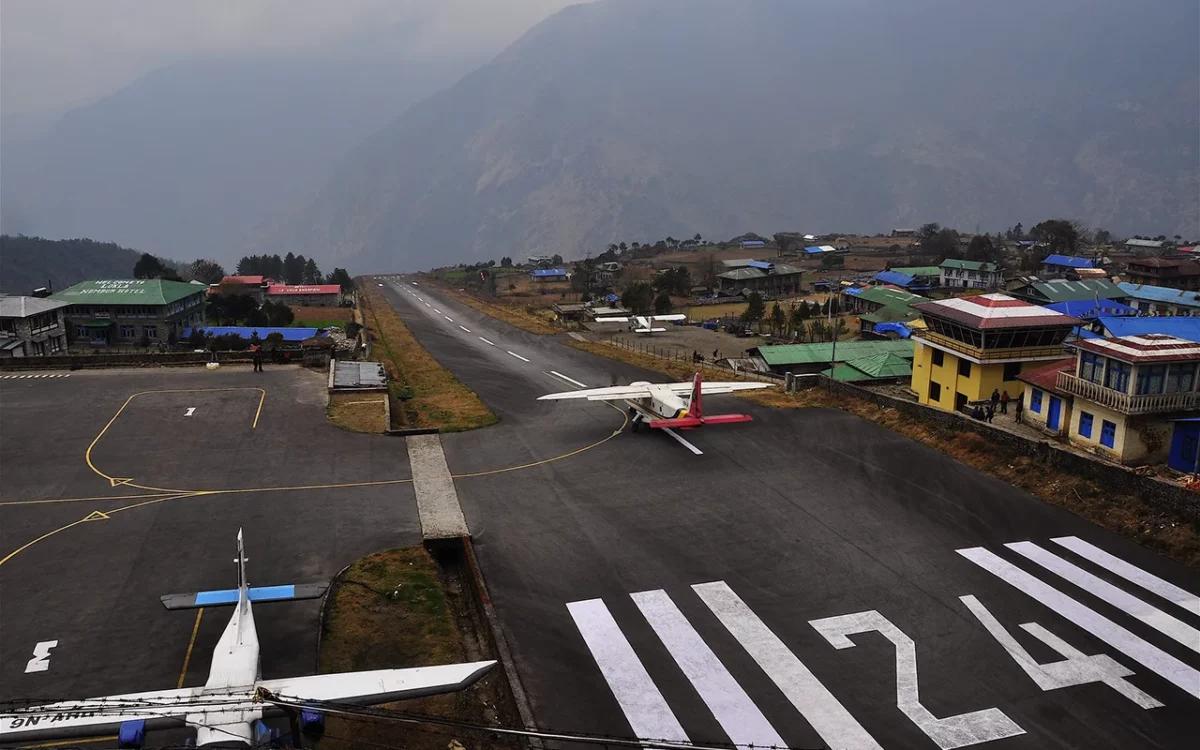
We start our official trek with a short flight to Lukla (2,840m), an airport infamous for its thrilling approach. The 35 minutes flight has stunning views of the Himalayan range including Kusum Kanguru and Mount Karyolung.
On landing, your trail begins a descent through green forests and crosses suspension bridges across the Dudh Koshi River. The Sherpa village enriches the route with its colors, sounds, and traditions.
Trekking for 3 to 4 hours longer, you’ll arrive at Phakding (2,610 m) where you can enjoy a cup of tea in a local teahouse, view the region, and get ready for treks ahead.
Highest Altitude
2840m (Lukla)Meals
Breakfast, Lunch, DinnerAccommodation
HotelDay 04: Phakding to Namche Bazaar
Your trek continues today and you make your way towards Namche Bazaar (3,440m), the busy entry to the Everest region.
You travel through dense pine forests, and over pretty suspension bridges on the Dudh Koshi River. Higher up, you’ll get a perfect view of Mount Thamserku (6,608m), Mount Everest (8,848m), Ama Dablam (6,312m), Mount Nuptse (7,861m), Lhotse (8,516m), and Kantega (6,779m).
The climb is steep in some places, but you get the first glimpse of Mount Everest as far out as you can see. At Namche Bazaar, you will feel the hustle and liveliness of this Sherpa town with its colorful markets and lodges.
Highest Altitude
3440m (Namche)Meals
Breakfast, Lunch, DinnerAccommodation
HotelDay 05: Acclimatization Day at Namche Bazaar
Today is Acclimatization Day in Namche Bazaar (3,440m) in order for your body to adjust to the altitude. You wake up and have a lovely breakfast after which you will hike to the Everest View Hotel, where you get different views of Everest, Ama Dablam, Nuptse, and Lhotse.
Other than this, the walk allows you to visit nearby villages like Khunde, and Khumjung and their traditional stone houses and Buddhist monasteries.
Namche is a nice place to relax in the afternoon, visit the Sagarmatha National Park Museum to learn more about the Sherpa culture and history, or head out to Namche’s vibrant market. This day of rest makes sure you’re well rested for the coming trips.
Highest Altitude
3440m (Namche Bazaar)Meals
Breakfast, Lunch, DinnerAccommodation
HotelDay 06: Namche to Tengboche
Today’s trek begins at Tengboche (3,860m) after having a good night’s rest. It’s a trail that first goes down through dense green forests and crosses the Dudh Koshi River.
Nearby you’ll see high mountain meadows and rough terrain becoming more common as you trek, there’ll be a difference in the landscape. On the way, you pass over breathtaking views of Mount Everest, Lhotse, and Ama Dablam with rhododendrons filling the trail.
You reach Tengboche and visit the famous Tengboche Monastery, an important spiritual center for Sherpa people.
Highest Altitude
3860m (Tengboche)Meals
Breakfast, Lunch, DinnerAccommodation
HotelDay 07: Tengboche to Dingboche
The trek you are setting on today will see you through Pangboche (3,930m) home to a historic monastery to Dingboche (4,410m). You will get a magnificent view of Ama Dablam and Everest, the topmost mountains in the region, as you hike.
The scenery gets better as you cross Imja Khola and you end up with a wide mountain view. Stay well paced and acclimatize in the high altitude village atmosphere of Dingboche while viewing the farm fields of potatoes, buckwheat, and barley.
Highest Altitude
3930m ( Dingboche)Meals
Breakfast, Lunch, DinnerAccommodation
HotelDay 08: Acclimatization Day at Dingboche
Dingboche, which is where you’ll spend today acclimatizing, is also essential to adjust to the high altitude. You can take a short hike to Nangkartshang Peak (5,083m) and have a chance to witness one of the most spectacular views in the Himalayas, the massif of Lhotse, Makalu, and Cho Oyu.
It’s a moderate hike that will get your body used to the low amount of oxygen. You can then walk around the village, visit the sacred Nangkartshang Monastery, and relax. Acclimatizing here, gives you improved stamina for the next stretch of the trek.
Meals
Breakfast, Lunch, DinnerAccommodation
HotelDay 09: Dingboche to Lobuche
\Along the way to Lobuche (4,940m) today, you pass through Dughla Pass (4,620m) where memorials to fallen climbers are placed at the foot of the Khumbu glacial moraine.
Close up views of Pumori and Nuptse are offered along the path. Further you climb, you still can’t help but keep looking at the beautiful scenery of Lobuche where you can rest and prepare for your trek to Gorak Shep and Everest Base Camp.
Highest Altitude
4940m (Lobuche)Meals
Breakfast, Lunch, DinnerAccommodation
HotelDay 10: Trek from Everest Base Camp to Gorak Shep
Today’s trek today is special. It is from Lobuche (4,940m) to Gorak shep (5,160m) then on to Everest Base Camp (5,364m). It is a 3 hour journey (approx 4.5 km) to Gorak Shep from Lobuche. You’ll spend a night in Gorak Shep before continuing for another 2 hours to Everest Base Camp.
When you reach the base of Everest, you feel the immense sense of achievement. The surrounding peaks of Nuptse, Lhotse, Ama Dablam, and Makalu will make you feel immersed in the tall mountains. We return to Gorak Shep to spend the night and take some photos before soaking ourselves in the surroundings.
Highest Altitude
5364m (Gorak Shep)Meals
Breakfast, Lunch, DinnerAccommodation
HotelDay 11: Trek to Kala Patthar and to Pheriche
Once you’ve had the thrill of making the Everest Base Camp Trek, you’ll drop down to Pheriche (4,371m), a pleasant village on the hillside below Ama Dablam. The 8 km descent will be around 5 to 6 hours.
Moving to lower altitudes you return to Dingboche (4,410m) where you will see impressive views of the mountains with the dramatic trek back.
Pheriche is an incredibly stunning place and also a peaceful place to rest after such a demanding trek to Everest Base Camp.
Highest Altitude
4371m (Pheriche)Meals
Breakfast, Lunch, DinnerAccommodation
Guest HouseDay 12: Pheriche to Namche Bazaar
Today’s trek goes from Pheriche, retracing Tengboche and Dingboche, going down through the beautiful Imja Khola Valley to reflect on your trip. This 5 hour trek offers great views of Everest, Ama Dablam, and Lhotse while you retrace your steps down the valley.
You will see the iconic Tengboche Monastery again to add to the day. Eventually, you reach Namche Bazaar again for the night in the lively region.
Highest Altitude
3440m (Namche Bazaar)Meals
Breakfast, Lunch, DinnerAccommodation
Guest HouseDay 13: Namche to Lukla
We start our descent from high mountain forests to lower valleys. Along the way, you’ll have broad views of the Phaking, Khumjung Valley, and Ama Dablam. The gateway to the Everest region, Namche Bazaar will give you one last chance to rest up, shop for souvenirs, and reminisce on your trek.
After all the final activities, and 5 to 6 hours of descending, you return to Lukla. This marks the accomplishment of the trip.
Highest Altitude
2860m (Lukla)Meals
Breakfast, Lunch, DinnerAccommodation
Guest HouseDay 14: Return flight to Kathmandu
Today, your final day starts with a flight back to Kathmandu. This duration of flight is short, around 35 minutes, but you get your eyes set for the last time on the beautiful Mount Everest.
You will forever remember the 14 days Everest Base Camp Trekking, and reaching Kathmandu, we invite you for a farewell dinner with traditional Nepali food.
Meals
Breakfast, Lunch, DinnerEssential Information of Everest Base Camp Trek 14 days
Himalayan Peaks Visible from the Everest Base Camp Trek
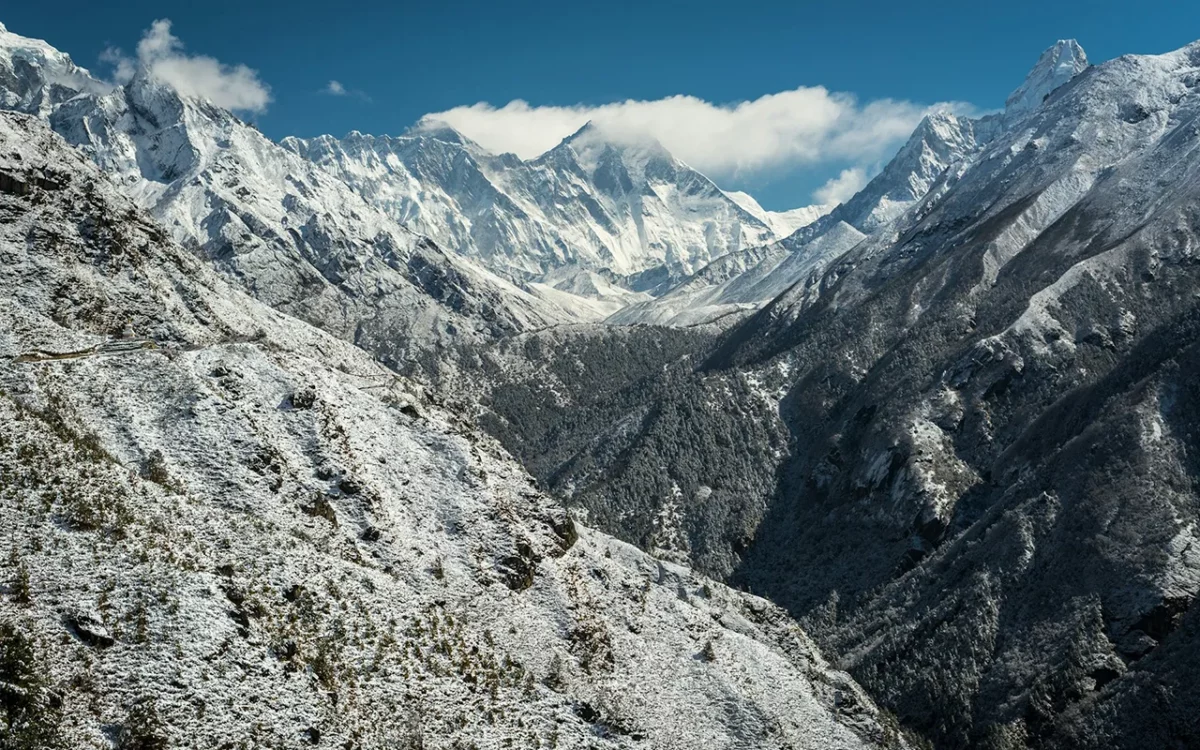
Being the most spectacular mountain views in the world, you’re getting some of the best of the Himalayan peaks on the 14 days Everest Base Camp trekking.
At 8,848.86 meters tall, Mount Everest dominates the skyline and leaves no doubt about its awesomeness on the trek. Views of Everest are complemented by the towering Mount Lhotse standing next to it.
Mount Nuptse and Mount Pumori appear on the rugged profile of the landscape, appearing as you go along the trail. The trail includes the views of Mount Makalu and Mount Cho Oyu, both excellent peaks showing the region’s scale and beauty.
Mount Ama Dablam is one of the most iconic mountains on this trek, also known as ‘the Matterhorn of the Himalayas.’ From various viewpoints, its sharp summit and grace catch the trekkers. The views are even better with Mount Thamserku’s own uniqeatures to add to the show.
Nangkartshang Peak offers a side trek for those seeking more views of the surrounding Himalayan giants. The EBC trekking offers fresh sight from each viewpoint and the adventure is full of unforgettable memories.
Challenges and Preparation for the Everest Base Camp Trek
With proper preparation, Everest Base Camp Trek, which is full of challenges can be a pleasant experience.
The main issue in high altitude trekking like the EBC is altitude sickness, which occurs after crossing just 3,500 meters. Acclimatizing properly and ascend slowly will mitigate the risks. Mornings and nights can be pretty cold, so you need to layer up in warm waterproof clothing.
The trails can be physically demanding, with long hours of off balance trekking on uneven terrain. Building fitness with regular cardio, strength training, and hiking will help you overcome this challenge.
Weather is unpredictable too, and if you don’t want to be caught in any rains or snow. It is best if you equip yourself with proper gear like sturdy boots, a good quality sleeping bag, and waterproof windproof jackets.
The key is packing adequately, and bringing essentials like a first aid kit, trekking poles, sunscreen, and energy snacks. On more difficult sections hiring an experienced guide or porter can make it easy to navigate and load.
Finally, pick a time when you can trek during better seasons, spring and autumn, to have clear paths and stable weather. If you are prepared and careful out when going, you can overcome the difficulties and enjoy the real beauty of this iconic trek.
Is Everest Base Camp Trek beginner friendly?
14 days Everest Trek is relatively moderate if you are in good shape with a sound mind. Though you don’t need any specific climbing techniques or past experience, getting yourself into the Everest Base Camp is not an easy game. You must be disciplined and have great patience along with a great physique. The highest point you will step in this trek is at 5,550m in Kala Patthar. However, you will not be resting overnight at this elevation.
The standard itinerary of the EBC trek is 14 days. In this journey, you will spend 11 days on the trail. That means 10 days of total hiking and one day of acclamation at the Namche Bazaar. Preparing yourself beforehand for your trek by adding cardio into your daily routine. Avoid alcoholic beverages and quit smoking.
The trekking path is not so gentle; you will find yourself on an unpaved gravel route with some steep uphill portions and downhill. You will walk on the trail for a minimum of 3 to a maximum of 8-hour elevation gain of 400 to 600 meters daily. The walk will not be continuous, though. You can rest for some time during your walk and stop at the tea house for lunch and snacks.
Nevertheless, the accommodation is first class, though at a high altitude. You will rest at a cozy tea house available on the trails at night.
Temperatures at various points in the Everest Base Camp Trek
The temperatures on Everest Base Camp Trek 14 days vary hugely, depending upon altitude and place. The maximum temperature at Lukla, the start of the trek at lower altitudes, averages 12.2°C while the average is 6.5°C, so it’s somewhat mild compared to the higher altitudes.
The key acclimatization stop, Namche Bazaar, has colder temperatures. The maximum goes up to 9.2°C, the average is 2.9°C, and the minimum down to 3.4°C. Although colder, it’s still doable for most trekkers using the right gear. It is a popular community where trekkers can get proper amenities, interact with locals and learn about their cultures.
If you climb higher, the temperatures plummet. Dingboche, another resting spot, also has a cold temperature of 5.3 °C maximum, an average of -2.9 °C and a minimum of -11 °C.
Compared to Lobuche (higher up at 29,478 ft) the conditions are more severe, with a maximum at 2.8°C, an average of -5.5°C, and a minimum of -13.8°C.
Gorak Shep, on the trek to Everest Base Camp, has a very cold temperature with a maximum of 1.8°C, an average of -6.6°C, and a minimum of -14.9°C.
These extreme conditions make it clear why you need to have the right clothes on and be ready to go, to enjoy a safe and comfortable trek.
Lukla Flight
Getting into the Everest region is an adventure of its own, and the Lukla flights add extra flavor to it. The flight from Kathmandu to the Tenzing-Hillary airport of Lukla (2,860 m) is the usual start of almost all the Everest treks.
Everest Base Camp Trek and many of the other trekking areas in Everest are connected by the Tenzing Hillary airport, which is described as the most hazardous airport in the world.
The flying time is short, only varying from 30 to 45 minutes. Look down from your window seat, and you will drop your jaw witnessing various landscapes within a few minutes. From the valley to green hills to mountains.
Internet Connection on Everest Base Camp Trek
In the early days, satellite phones, including Everest Base Camp, were highly preferable in the Everest region. Coming to 2023, the internet has played a vital role in this region too. Despite the fact that the EBC Trek is the world’s highest trekking trail, it possesses internet accessibility.
Now, share the live views of your Everest Base Camp trek moments with your loved ones through video calls. Update daily Everest posts.
In the lower region, Wi-fi is easily available at all teahouses and free at some as well up to Gorak Shep. The tea house costs a penny for the wifi service at Lukla, Phakding, and Namche Bazaar. After that, Khumjung goes to Gorakshep, and the tea house charges $3 to $7 per hour for wifi service.
Besides wifi, mobile data has become a good option nowadays. Both leading networks of the country: Nepal Telecom and Ncell, provide data internet services in the Everest region.
What’s more? A local internet-providing service called Everest Link is available in the region, which provides internet access on the trail, charging for a certain amount.
Availability Of Drinking Water
Availability of Drinking Water on Everest Base Camp Trek
Being hydrated on a trek is very important. Walking and climbing the whole day exposes your body to dehydration, which is riskiness. It is highly recommended that trekkers should drink at least 3 to 4 liters of water a day.
Like every single product, bottled water is expensive. Hence, carrying a reusable water bottle to refill water from available spots is a great idea. However, drinking water directly from the tap or anywhere else is no less than dangerous. Then what to do?
Water purification tablets (chlorine or iodine tablets) can be used to treat the water, which is easily available in pharmacies. However the use of those tablets can alter the taste of water. For better taste, you can add flavored electrolyte powder which is beneficial as it provides minerals like magnesium, sodium, and potassium.
Moreover, teahouses provide boiled drinking water at an additional cost between $1 to $4. Going to higher altitudes where transport of resources becomes difficult, the prices increase accordingly and can be quite expensive.
Importance of Travel Insurance on Everest Base Camp Trek
If the Everest Base Camp trek is on your list, travel insurance is significant in the first place. Since EBC takes you to as high as 5644 m, getting your travel insurance done is the safest step.
Though our experienced agents take safety as the number one priority, no one can rule out emergencies and accidents that can happen. Trekkers can experience Acute Mountain Sickness at a higher altitude due to low oxygen availability. If not treated on time, it turns fatal.
Furthermore, trekking in a mountainous area always comes with unreliability. Therefore, ensure that your insurance policy protects you from the cost of all injuries and, most importantly, helicopter evacuation and hospitalization in case of a severe medical emergency.
Cost wise, without travel insurance, you will face a major issue finding help. Helicopter evacuation with insurance will cost you about $1000. However, having to call helicopter rescue without insurance will empty your wallet, costing between $3000 to $5000.
In addition, if you don’t have insurance, the helicopter rescue, medical coverage, and treatments aren’t reliable either. This becomes insanely dangerous in remote areas like the Everest region.
Accommodation and Meals on Everest Base Camp Trek
The Everest Base Camp trek is entirely filled with tea houses along the trek. Teahouses on the trail come with various grades depending upon the price range. The Higher the price, higher room standard, and vice versa.
How are rooms in the trails? Well, most of the single rooms consist of two single beds and some furniture like chairs and tables. Furthermore, there is less chance you have an attached bathroom, you will rather find a shared bathroom.
You will find a Western-style toilet in the lower elevation, but as you ascend to the higher elevation, you will find a squat toilet or just a small hut outside the teahouse with a deep pit.
Moreover, the tea house provides cold showers for free, but they will charge you $1-$3 for hot showers. Additionally, some tea houses demand $2 to $3 per hour to charge your electronic devices.
Meals on the Everest Base Camp trek supply you with various kinds of delicious, traditional, and nutritious meals.
Bread, eggs, chapati, pancakes, oatmeal, muesli, and cornflakes are breakfast options you can have. These hearty meals kick start your day with good nutrition.
For lunch and dinner, you’ll have filling dishes such as rice and lentil curry, vegetables, dal, and meat. Other popular items include vegetable fried rice, chow mein, noodles, thukpa noodles, Sherpa stew, garlic soup, fried or steamed momo, pasta, spaghetti, pizza, and sandwiches.
Rice pudding and pastries make delicious desserts to end your delicious meal.
For a balance of carbohydrates, protein, and high energy, Nepali Dal Bhat is highly recommended for this reason. Beverages like tea, coffee, hot lemon, hot chocolate, and fruit juices, will keep you refreshed and hydrated along the trek.
Packing List for Everest Base Camp Trek
Clothing
You need to pack clothing that balances in terms of comfort and protection when you go for the 14 days Everest Base Camp Trekking.
For long days, durable and breathable trekking pants as well as sturdy trekking boots are necessary. At high altitudes, an insulating down jacket keeps you warm, and a windcheater protects you from the wind and light rain.
Wear a long sleeved shirt for sunny days and short sleeved shirt for warmer days. Moisture wicking socks, trekking gloves, and thermal underwear provide you with a cozy time. You need to have a scarf and a hat to cover the sun and wind, together with flip flops for a comfortable night. Don’t leave without a raincoat in case of unexpected showers.
First Aid Kit
An inclusive first aid kit is great for curing common trekking causes. Key band-aids for cuts and blisters, insect repellents to keep off the bites, and Diamox tablets for altitude sickness.
If there is stomach hurting, bring anti-nausea medicines, and for pain relievers, you need ibuprofen and paracetamol. You need to have this items to ensure your safety.
Toiletries
Bring your own toiletries, for basic hygiene and comfort. This includes biodegradable soaps, shampoo for daily use, toilet paper and wet tissue paper for easiness, and lip balm and moisturizer to protect your skin from being dry.
Always remember to get sunscreen to prevent sunburn and hand sanitizer in case of any quick cleaning on the go.
Accessories
For accessories, add sunglasses for the bright sun and a torch light for late evening or early morning hikes. For nights, a sleeping bag rated for -10°C, and a solar charger for devices such as phones and cameras to take amazing shots.
Hydrate yourself by carrying water bottles with water purification tablets. Keep drinks warm with a hot water thermos in colder sections of the trek.
Important Documents
While you’re preparing for EBC Trekking do not forget to pack the essential documents that will make your trip smooth.
Passports for identification and travel, and the required travel permits to enter the trekking area are also included. You should have those important permits along the trek, as you can be asked on the checkpoints.
Factors To Consider on Everest Base Camp Trek
If you’re planning for 14 days Everest Trek, then there are several things that you have to understand about trekking to help you enjoy it to the maximum.
At high altitudes, acclimatization is important and it will take you at least a day or two to adapt. To assist your body in adapting, try trekking slowly, staying hydrated, getting plenty of sleep, and try to avoid alcohol. Also, it is important to pre-book a hotel, most in spring and autumn peak season.
It’s physical and mental preparation that gets you through the trek. Get started on training for about 2 to 3 months with cardio such as jogging, cycling, or swimming. Building on physical strength, having a positive attitude, and a strong mental resilience are important to the challenge.
Pack light only things that will be needed for the trek. It’s not too cold out, so no oversized warm clothing will be necessary. As solo trekking is banned in Nepal, you need to hire a professional guide, which we can allocate to you in our package.
Our guide will help navigate the trail, recommend accommodations, and advise on the trek.
You also want to hire a porter to carry heavy luggage at high altitudes. You’ll help support the local economy and get help from porters in return.
Also, note that there is an unexpected weather change in the Everest region, the Khumbu Glacier is melting rapidly because of global warming.
Trip Reviews on Everest Base Camp Trek 14 days
