

14 Days
US$

Duration

Trip Difficulty
Easy

Max Altitude
3,650m / 11,975ft

Activity
Tour, Sightseeing

Destination
Tibet & Nepal

Group Size
2-16 People
Highlights of Nepal and Tibet Tour Package
- Three days acclimating stop at Lhasa with a visit to its key point of attractions: Potala Palace, Sera and Drepung Monasteries, Jokhang Temple, and Barkhor Market
- A comfortable drive along the Tibetan landscape amidst the culture of the pure-hearted Tibetans
- Short detour at Tashilhunpo Monatsrey at Shigatse
- A graceful view of Makalu, Lhotse, Cho Oyu, Shishapangma, and Qomolangma from the Pang La Pass
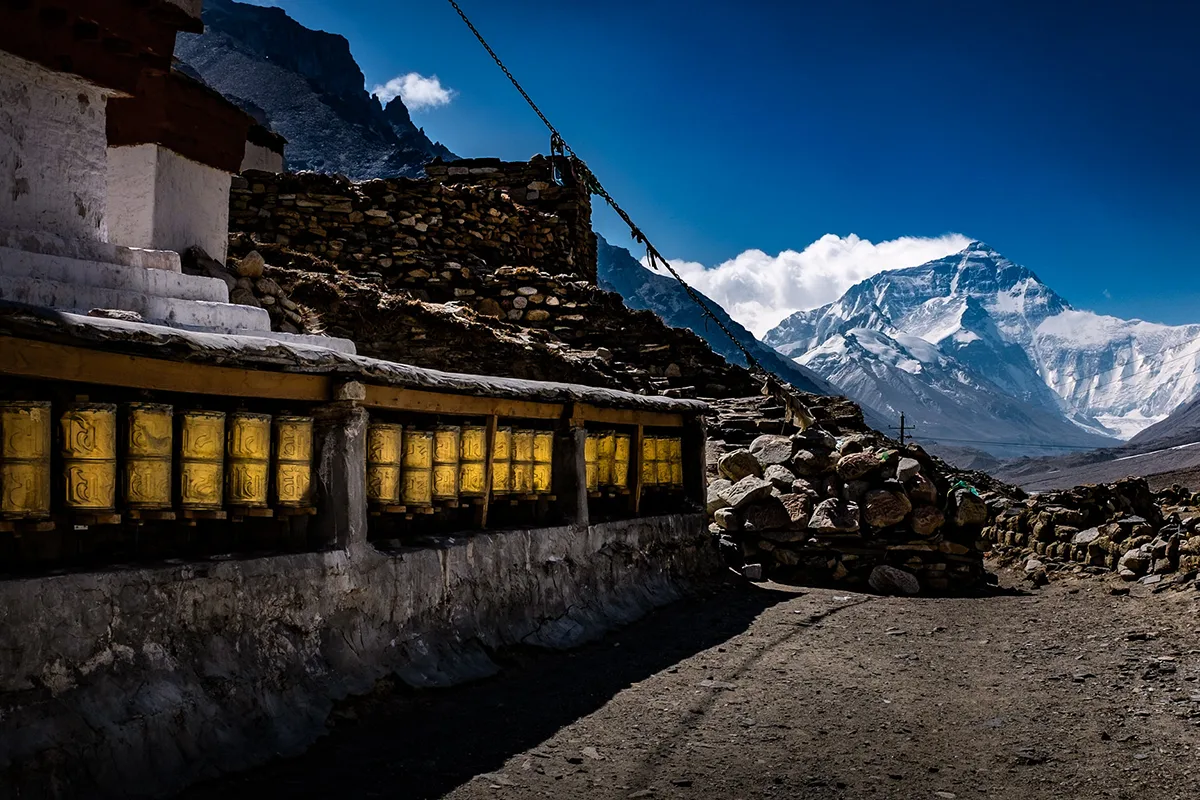
- An overnight stay in front of His Majesty The Everest at Rongbuk
- Walks on the narrow streets and alleys of the Old Quarter of Kathmandu, with numerous markets, its thousand stalls, and colorful life
- Temples, lakes, and pagodas of Pokhara, one of the most sensational sites in Nepal
- In nature within the mysterious Chitwan National Park with the company of one-horned rhino and a ferocious Bengal Tiger
Itinerary of Nepal and Tibet Tour Package
Day 01: Reach in Lhasa (3680 m), pick up and hotel drive
Welcome to Tibet! On the first day of our Nepal and Tibet tour package, the International Airport of Gonggar is delighted to receive you. Our accompanying team is pleased to assist you in completing the formalities at the airport and drive you along the 90 km road next to the Yarlung Tsangpo River (Brahmaputra River) towards Lhasa.
On the way to the closed city, we can see several Gompa (monastery) ruins and the giant Buddha carved into the large rocks. We may also get a glimpse of the huge Potala Palace looming above the sky of Lhasa.
Slowly, we will move forward to our hotel and we will spend the remaining time with acclimatization and a quiet walk.
Note
If you choose to fly over the Kathmandu sky to Lhasa, a mountain plane will take you over the east Himalayan range of Nepal and the magnificent barren landscape of Tibet. We assure you it will be a world-class magnificent flight over the eternal wall of Mount Everest.
However, if you are arriving via train to Lhasa, please inform us about your travel details so our Tibetan partners can be on time at the designated train station to receive you with the rest of the group.
Highest Altitude
3680mMeals
Tibetan welcome banquetAccommodation
3-star standard hotelDay 02: Tour of Tibet’s capital (Potala Palace, Jokhang Temple, Barkhor Street)
Unfortunately, we only have two full days to explore the wonders of Lhasa. Today, we will create the most beautiful memories of the Tibetan state, which has survived more than two thousand years and is currently throbbing in the bosom of its big brother China.
The destinations for this day are the Potala Palace, Barkhor street, and Jokhang Temple. In the evening, we will see all of this again while wandering through the pedestrianized streets of the beautifully lit city.
Our tour first goes to the Potala Palace, the center of Tibet’s history for 1400 years. It used to be the settlement for winter of all the Tibetan rulers since the 7th century. In the 17th century, it became the seat of the religious administration, the Dalai Lama.
The massive walls of the Potala Palace rise from the Red Hill in the epicenter of the Lhasa Valley at an elevation of 3,700 meters.
The main ceremonial hall is located in the White Palace, with the Dalai Lama’s throne, private residences, and a reception hall on the top floor, at a height of 170 meters. The palace has 698 wall paintings and houses a large collection of nearly 10,000 painted scrolls.
Now, we will go to the Jokhang Temple- the most ancient Buddhist temple in Tibet. Its oldest parts were erected by Songtsen Gampo, the first king of unified Tibet, in 652, on the occasion of his marriage to the princesses Bhrikuti of Nepal and Princess Wencheng of China.
First, we will arrive at the huge ceremonial square in forefront of the main gate of the temple, Barkhor Square. From here, we will enter the interior through the main entrance of the Gompa complex.
Then we will move on to Barkhor Street which is not really a street, but a Buddhist pilgrimage site, with a huge ceremonial square in the middle and a great shopping street at the same time.
The Barkhor, which dates back more than 1,000 years, encircles the Jokhang Monastery. Here, we will observe pilgrims from all over the world and their sometimes strange behavior and customs. By late afternoon, the street scene changes. Chairs come out of the shops to dry and the whole Barkhor turns into a colorful night market.
Everything that can be found in a night market is available here, but the real bang is the street food and the huge selection of food and sweets from all over China.
Meals
BreakfastAccommodation
3-star standard hotelDay 03: Lhasa: Outing to Drepung Monastery, and Sera Monastery
Our today’s program will take us a little further from the city of Lhasa and is none other than the largest monastery and religious studies university complex in Tibet.
The tour after our breakfast will guide us to Drepung Monastery founded in 1416. It quickly expanded its spiritual influence and became one of the holiest monasteries in the Tibetan regions.
It worked constantly to encourage the study of Buddhism. Throughout the history of the Buddhist college, many significant Tibetan leaders including the Dalai Lamas studied here.
Before the Dalai Lama fifth transferred to the Potala Palace, Drepung Monastery was the political and all-Buddhist religious center of Tibet.
Our next visit today will take us to the Sera Monastery which translates as Wild Rose in the local tongue. We will climb a little higher around 3700 m above the river valley.
From here we can enjoy a dizzying view of the city and the valley. The first buildings of the Sera monastery were built here in 1419. Soon after its opening, a religious studies college system was opened in it, which is still operating today.
The busy daily life of the monastery, the many colorful buildings and the artistic crafts painted on the walls or hanging there, the beautiful interiors suggest a truly exciting and pleasant visit.
For a remarkable end to our Lhasa tour, we will wander around the night market and hunt for some gifts.
Meals
BreakfastAccommodation
3-star standard hotelDay 04: Lhasa to Shigatse (3,850 m) via Gyantse (3,950 m), 370 km, 7 to 8 hours drive, Explore Yamdrok Lake, Karola Pass, Pelkor Monastery
We are now well adapted and after enjoying two days in Lhasa, we will begin our drive across the Himalayas on the famous Friendship Highway. The trip heads southwest and crosses the 4797 m Kampala Pass which is our final farewell to Lhasa.
From the pass, there is a magnificent view beyond the turquoise, scorpion-shaped lake, Yamdrok Tso. It is traditionally one of Tibet’s four sacred lakes (along with Nam Tso, Lhamo Lhatso, and Manasarovar), and
here we drive along the lake for the next few hours.
We may be lucky enough to see herds of yaks on the way up to the Karo La pass 5,010 meters, which comes close under the impressive peaks of Ralung (5399 m) and Nojin Kangsang (7191 m).
The road now dives down from the high mountains and before arriving
Tibet’s fourth largest city Gyantse at 3,950 m altitude. It is a glorious traditional Tibetan town located north of the Nyang Chu River.
In Gyantse, there is, among other things, the beautiful Pelkor Chode Monastery. The stuffed animals above the monastery gates symbolize the mounts on which the gods arrive here to serve.
The calling card of Gyantse is the multi-colored Kumbum stupa (1000 images of Buddhas, deities, and bodhisattvas) 32 m high. Here is a typical Nepalese stupa, symbolizing the worship of the main elements of the universe: Earth-Water-Air-Fire-Ether.
The stupa rises like a crown above four images of eyes that look in all four directions.
Now a 1.5-hour short road will take us to Shigatse- the second important and largest city in Tibet where we will dine and rest.
Activity & Duration
7 to 8 hours driveHighest Altitude
3950mMeals
BreakfastAccommodation
3-star standard hotelDay 05: Shigatse (3,850 m) to Rongbuk Monastery (5,100 m) 340 km, 8 hours, Explore Tashilhunpo Monastery, Gyatso La Pass, Rongbuk Monastery
Before starting our journey toward Rongbuk Monastery, we will first go for a small tour of the Tashilhunpo Monastery translated as Auspicious Sumeru Monastery.
Perched at Tara Mountain (Drolmari Peak) base in Shigatse, it is the biggest monastery Shigatse and home to the Panchen Lama. The Gompa was established in 1447 by Gendun Drup. He was the student of Tsongkhapa, father and creator of the Gelug sect of Tibetan Buddhism.
The hall of the Gompa has the sculpture of Shakyamuni Buddha while the scultpure of 4th Dalai Lama and Gendun Drup surround it’s two sides.
Once the visit is over, we will take the road that will take us to the Rongbuk Gompa and Everest Base Camp. The long Friendship Highway will take us along the landscape that more and more turns like in a postcard. Crossing the 4950 m high Tropu La Pass we will reach the small shepherd town of Lhatse.
From Lhatse, we will move on to tackle the 5200 m Gyatso La Pass aka Lhakpa La Pass. The phenomenal view of the Everest opens up from the Pass. The peaceful journey now takes us to Shegar which today is known as New Tingri.
A few km further, we will be met by the Chinese checkpoint. Here, Chinese soldiers will check our authorizations and passports. Then we will leave the Friendship Highway and march south and thus begin the
long and hard stretch of dirt road (almost 100 km) that will take us to our destination.
A few more km of hard climb will take us to the top of the 5150 m Pang La Pass where extraordinary spectacle appears before our eyes. A vast glimpse of the Himalayan chain, snow-capped peaks over 8000 m: Makalu (8485 m), Lhotse (8516 m), Cho Oyu (8188 m), Shishapangma (8027 m), and then Qomolangma, the Tibetan name for the highest peak in the world, Everest at 8848 m.
The road now moves downward toward the Rongbuk Monastery with Everest towering in front of it. With an altitude of 5100 m above sea level, this monastery is much more than a spiritual pilgrimage destination.
Activity & Duration
8 hoursHighest Altitude
5100mMeals
BreakfastAccommodation
Tent GuesthouseDay 06: Drive from EBC (5200 m) to Gyirong Town (2700 m), 7 to 8 hours
Early at dawn, we will travel on the route to the Everest Base Camp. The route is only 21 km long so we can either hike or take a bus or some horse cart to reach EBC at 5200 m. The Everest appears to be ever closer and more imposing lit up by the first light of the sun.
We will then head straight back to our tent hotel for a hot breakfast and get ready to drive to Gyirong aka Kerung border between Tibet and Nepal.
We will drive and cross once more the Pang la Pass and continue over the large Tibetan plains of Tashi Dzong to Tingri. The Friendship Highway will then lead us past the beautiful waters of Lake Pelku. We will then march to Dzongka then the downward road will eventually take us to Gyirong.
Activity & Duration
7 to 8 hoursHighest Altitude
5200mMeals
BreakfastAccommodation
Standard hotelDay 07: From Gyirong Port (1,830 m) to Kathmandu (1,300 m) via Rashuwaghadi, 7 to 8 hours
We will begin our drive to Gyirong Port via Jilongzhen after having breakfast in the early morning. We will then cross the border and drive the good 60 km into Nepal.
On the Nepalese side, the border check is at Ghatte Khola near Timure in Rasuwa. Here, we will take care of the final formalities and drive on a mountainous dirt road towards Syabrubesi. After getting out of Rasuwa, we will travel to the major towns of Trishuli and Nuwakot.
We can explore the old royal kingdom of Nuwakot for a while then get on the road once again for around 4 to 5 hours to reach Kathmandu. After a drive through the tumultuous streets, we will settle in our hotel.
Activity & Duration
7 to 8 hoursHighest Altitude
1830mMeals
BreakfastAccommodation
3-star standard hotelDay 08: Kathmandu Tour, Kathmandu Durbar Square, Pashupatinath Temple, Swayambhunath Stupa, Boudhanath Stupa
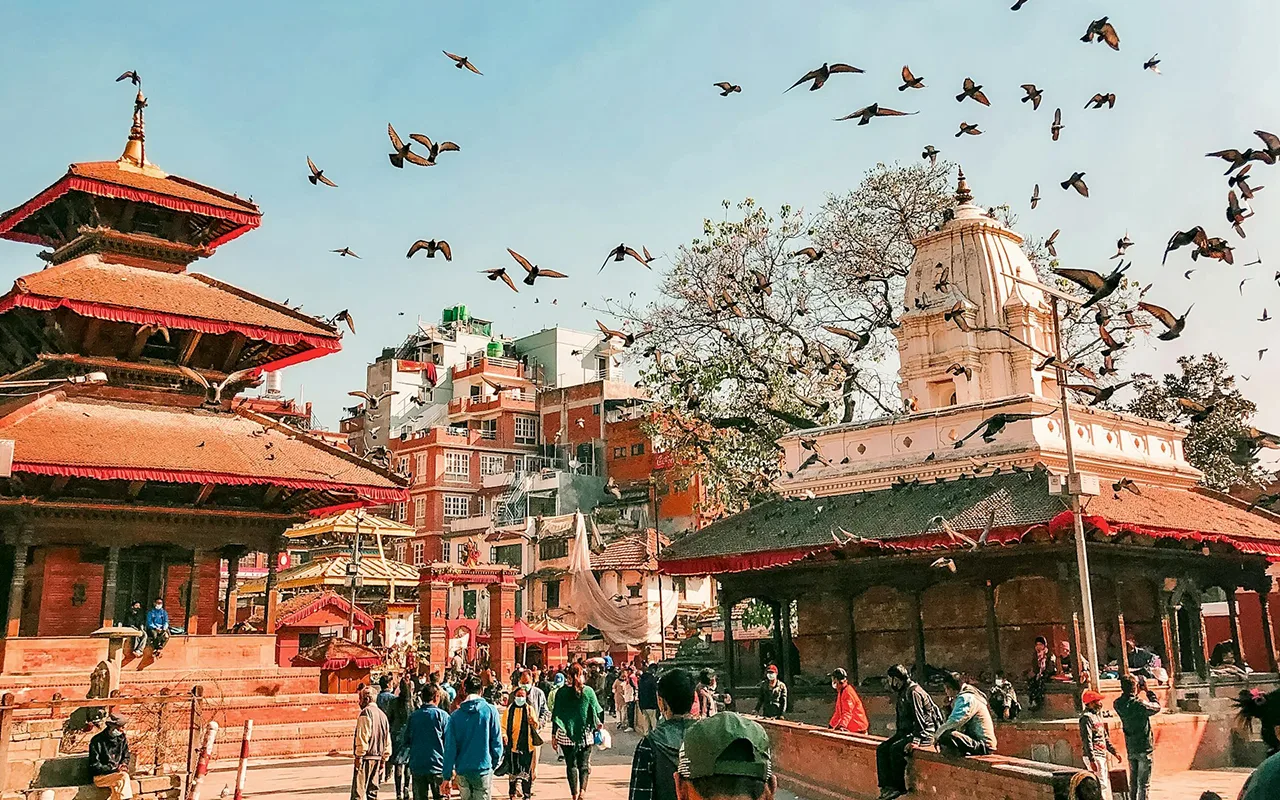
After breakfast in Kathmandu, we will get on with the sightseeing tour of Kathmandu city. The first stop is Kathmandu Durbar Square which is the cultural world heritage site and the true center of Nepal.
It is home to the royal palace, many public institutions, temples of the most important Hindu deities, and Buddhist holy places. The buildings surrounding the square and the small streets starting from here are full of shops, and fairs are often held here. There is also Kumari Ghar, the home of the living goddess Durga.
Then our guide will take us to another Heritage Site of Pashupatinath Complex- one of the most important holy places for the Hindu religious communities of Nepal, the true spiritual heart of Nepal.
We will wander along the Bagmati River bank and see a ceremonial cremation and the release of the ashes into the river- a funeral custom of Hindus.
We will then continue to Swayambhunath Stupa- the second most important site of Buddhism in Nepal. Listening to the muttering of traditional mantras and the drumming of prayer drums, we can wander for a long time among the many buildings and shrines on the hill of the stupa.
The scene of our last program in the afternoon is Boudhanath, one of the most wonderful spiritual centers in Kathmandu. The most beautiful, in fact, will be seen in the radiant light of the late afternoon sunlight.
Meals
BreakfastAccommodation
3-star standard hotelDay 09: Kathmandu to Pokhara (822 m), 200 km, 7 hours
In the morning, we will undertake a beautiful ride out of the valley over the Thankot pass along the Prithvi Highway to the Trisuli river where we see lots of small villages and sometimes people on a rafting trip.
A Mugling Naraynghat Highway will then guide us through the lush jungles towards Bandipur. The Ramkot Ridge and Manakaman Temple of goddess Durga can be a beautiful site to stop for some exploration.
The showcase of exquisite Begnas and Rupa Lake indicates we are soon approaching Pokhara. We will install in our hotel room and prepare to spend two nights here.
In the evening, we will take a pleasant boat ride on Lake Phewa. The ancient Tal Barahi temple located on the island of Phewa is also worth our visit. It is a two floored pagoda style temple built in respect to Goddess Varahi, another form of Goddess Durga.
Then, the Lakeside will be our next stop for evening relaxation. A lakeside promenade, an amusement park, the contemplative little lakeside cafes, local restaurants, and discotheques offer us many entertainment opportunities.
Attention
As an alternative to the lengthy road journey, you can also take a brief flight to Pokhara lasting only half an hour at an extra price.
Activity & Duration
7 hoursHighest Altitude
822mMeals
BreakfastAccommodation
3-star standard hotelDay 10: Pokhara sightseeing program
Today’s program presents a prestigious journey to the International Mountain Museum of Pokhara. No wonder as three of the world’s ten highest mountains above 8,000 meters are located within a 50-kilometer radius of the city. Dhaulagiri, Annapurna, and Manaslu border the valley to the north. This museum stands as a tribute to this rich legacy.
We will then advance to Devi’s Falls- an extremely special and spectacular natural wonder. The subsiding water of the Pardi Khola stream originating from Phewa Lake carves a 500-meter-long underground tunnel in the rock bed of the lower basin and disappears there.
This natural phenomenon gives Patale Chango (Devi’s Falla) its Nepali name.
We will then move on to World Peace Stupa/ Shanti Stupa. It is a Buddhist pagoda-style monument located on top of a hill outside the city with a magnificent view of Lake Phewa and the mountains. In addition to the wonderful panorama, the sunrises and sunsets from here are also unforgettable.
Meals
BreakfastAccommodation
3-star standard hotelDay 11: Dawn on the Himalayas at Sarangkot (1600 m) and Drive from Pokhara - Chitwan 400 to 800 m elevation, 170 km (around 5 hrs’ drive)
We will complement our today’s travel with the world’s most amazing Himalayan sunrise from Sarangkot. Getting up before dawn, we will either take a short walk of about 2 to 3 hours or take a car towards the Sarangkot Viewpoint.
The first light of the sun slowly creeps down the mountainsides of Annapurna, and its companion along with Machhapuchhre, Dhaulagiri, Gangapurna, Manasu, and Lamjung.
After walking to our hotel and repacking our stuff, we will again tie our seat belts to drive to Chitwan. The driving journey takes along once again the Prithvi Highway and further out to the Terai and its lively small towns and open forest with changing views.
In the middle of the afternoon, the famous Royal Chitwan National Park is reached bordered on north by the Narayani and Rapti Rivers. On the east, the Parsa Wildlife Reserve surrounds the park while India encircles it on the south.
Activity & Duration
around 5 hrs’ driveHighest Altitude
1600mMeals
BreakfastAccommodation
3-star standard hotelDay 12: Full Jungle Day in Chitwan National Park
Our day today, from early morning until late at night, is all about the wonderful nature! We will engage in an early morning jungle odyssey in Chitwan National Park. The park is particularly famous for its fearsome yet beautiful creature the Royal Bengal Tiger, and Gharial crocodile along with the one-horned rhinoceros.
We can take a jeep ride or climb an indifferent elephant or walk to explore the sensational jungle atmosphere of the park. The sounds of nature, the monkeys talking to each other, the mysterious sounds of deep forest, one-horned rhinos, and tigers (if our Karma helps us) will be an unforgettable treat.
Then a short visit to Hattisar, the elephant breeding and training center is also on our program. We can see how the elephants prepare for their work, and learn about their daily life and habits.
Meals: Breakfast
Meals
BreakfastAccommodation
3-star standard hotelDay 13: Return trip from Chitwan - Kathmandu (around 6 hrs’ drive)
From the warm lowlands of Chitwan, we will return to Kathmandu. It is a beautiful 6-hour drive through the best of Nepal. In the afternoon there is arrival in Kathmandu and the hotel. You can explore on your own the beautifully crafted Patan Durbar Square or take a wonderful walk in the Garden of Dreams in Thamel.
Activity & Duration
around 6 hrs’ driveMeals
BreakfastAccommodation
3-star standard hotelDay 14: Kathmandu and return home
An eventful program has come to an end today and it’s time to turn home. We will be by your side to see you off at the Airport.
Meals
BreakfastEssential Information of Nepal and Tibet Tour Package
Best Time
Tibet experiences sunny, dry, and windy weather for most of the year, while Nepal has a tropical climate influenced by seasonal rainfall. In Tibet, our tour takes place in the southern part at an altitude of above 3000 m which is of course dominated by the raw, and harsh climate. In Nepal, our tour is concentrated on the flat plains of Terai and the low mountainous regions of Pokhara and Kathmandu.
Therefore, the most ideal time for our Nepal Tibet tour which allow you to enjoy the beauty of both nations to the fullest are March to May and September to the beginning of October. March to May brings spring in both Tibet and Nepal with pretty dry weather and warmer days of 25 degrees Celsius.
Both Nepal and Tibet feature the season of fall from September to the early days of October. The summer monsoon subsides bringing a lot of sunshine and blue skies. The daytime temperature is in the pleasant range of 15-20 C, but at night, the air can cool down to around 5-10 C. In Everest area and Tingri in Tibet, frost can be expected so a good sleeping bag is needed.
Likewise, the southern region of Tibet and Nepal is influenced by the monsoon rain between June to August. While Lhasa and Shigatse see little rain, Everest is soaked during these months. Pokhara, Kathmandu, and Chitwan will also experience heavy rainfall.
From late October to February, the weather can quickly change dropping the temperature drastically with strong winds, particularly in the Tingri and Everest Area, leading the residents to close their accommodations.
Kathmandu and Pokhara on the other hand will see a lot of sunshine during the day, but the temperature can drop to 0 to 1 degree Celsius at night. While Chitwan experiences a warmer weather.
Difficulty
The Nepal and Tibet tour is an effortless journey where the mountainous roads of Nepal and the Highlands of Tibet are crossed in a four-wheel drive.
In Tibet the road network that connects the capital Lhasa to the major cities and the Nepalese border is asphalted and in good condition. However, some detours into side valleys to visit monasteries and the Everest Base Camp involve journeys on dirt roads, subject to mud or dust but efficiently manageable.
One of the main hindrances that we will come across on this tour is the altitude. The average altitude of the Tibetan plateau is 4000 m and involves some inevitable acclimatization problems in the first days of your stay.
To combat this problem, we have designated 3 days in Lhasa for calm walks around the key landmarks of the city. By the time we proceed to the Rongbuk Monastery, we will have better adjusted to the lower oxygen levels in Tibet.
Another challenge is the lack of tourist framework in Tibet. Despite the developments in recent years, we still require a spirit of adaptation. Some hotels have been renovated and are now acceptable, others, especially in smaller towns, are neglected and lacking in terms of maintenance.
Altitude Sickness
In our Nepal and Tibet tour package, we will encounter high altitude only in Tibet, as the journey in Nepal will take place in relatively flat terrain. Additionally, Tibet’s air already has lower oxygen levels than other regions of the world.
This can cause a risk of altitude sickness, which has nothing to do directly with fitness or age, and it can affect even the most well-trained.
It mainly occurs when you overload yourself at such a high elevation. You will get to and above 3000 m quickly already when you are on the flight or on the trail. So we advise you to rest in your Lhasa hotel on the first day and do not hurry when taking a whole day tour of the city.
But there are always a few who feel mild symptoms such as headache, lack of appetite, and insomnia, but this often passes very quickly.
Please communicate with our guide about your problem before your condition gets serious. If you have more severe symptoms such as fatigue, severe headache, dizziness, and vomiting, then you can take Diamox which can to some extent prevent and alleviate mild altitude problems.
Oxygen administration in case of breathing difficulty can also help. But please avoid its usage for mild discomfort as its frequent administration may make it ineffective when you really need it at high altitudes like Everest Base Camp or Rongbuk Monastery, situated at 5200 m.
Physical Fitness and Health
Nepal Tibet tour due to the height at which the itinerary takes place can be tough for those who already have problems with hypertension, cardiovascular, asthma, and other respiratory conditions. So please deliberate with your doctor and carry out the physical examination.
And, for those who are physically fit and healthy, there is no necessity for special or advanced preparation and training sessions since we will be traveling throughout the Nepal Tibet tour not trekking.
However, we will still be crossing the 5000 m mark at Rongbuk Monastery and EBC, so some level of preparation can help in avoiding altitude sickness.
So, please include activities like walking, biking, swimming, running, and squatting to improve your longevity and stability.
In addition, this program is all about a spirit of adaptation, cooperation, and teamwork. So please mentally prepare yourself for the nature of the tour, the natural surroundings, and the need for coexistence.
Accommodation
The hotels in Tibet cities of Lhasa, Gyantse, and Shigatse are cozy and small with a wonderful atmosphere. They may not be luxury ones but we promise our Tibetan team will choose you the best among the best.
In the countryside in Shegar, Tingri, and Rongbuk, the accommodation will be at small simple hotels and sometimes during the busy season in the small dormitories (4 to 6 beds in one room), especially in Rongbuk.
In Kathmandu, Pokhara, and Chitwan, the hotel will be three-star standard tourist accommodations equipped with a private bathroom and toilet with hot shower, and free Wi-Fi access.
Meals
The participation cost in our Nepal and Tibet tour package includes breakfast throughout the tour. On your first day in Lhasa, you will be treated with the exceptional traditional Tibetan welcome banquet hosted by our Tibetan partners. During the rest of the Nepal and Tibet tour, you will be at liberty to select your lunch and dinner.
Food expenses in Tibet and Nepal are quite manageable. Street food stalls and restaurants sells authentic meals for as little as $1-$3. Eating at mid-range restaurants costs about $5-$10 per meal. For those who enjoy fine dining, meals can range from $10 to $20 per person.
In the small countryside villages of Rongbuk, Tingri, Lhatse, and Shegar, the food options are limited to a modest selection of Tibetan meals of noodles, bread, tea, and some vegetables.
But in Lhasa, Shigatse, there are diverse dining options from Chinese, Nepali, Indian, and Thai to international dishes along with bars and cafes.
Transportation
Our Nepal and Tibet tour package itinerary comes with off-road private air-conditioned vehicles for all the ground transportation within Tibet and Nepal.
Please enjoy the free pick-up and drop-off assistance for airport transfers. On the Tibet side, a private vehicle will transmit you from Lhasa airport to your hotel and will also take you on a tour of Lhasa, Shigatse, and Rongbuk.
After crossing the border to Nepal, our team will be presented with a bus or van or jeep (private of course) and drive you towards Kathmandu. Transportation to Pokhara and Chitwan will also be provided in a private bus, van, or jeep, according to the group size.
If you prefer flying from Kathmandu to Pokhara and from Pokhara to Chitwan, additional charges will apply.
Travel Insurance
We would like to draw your attention to the fact that the condition of participation in our Nepal and Tibet tour package is travel insurance valid for the entire duration of the Nepal Tibet Tour.
And, if you like to engage in some extreme sports while in Pokhara or Chitwan such as climbing, canyoning, paragliding, bungee jumping, or rafting, please include the extreme sports category in your insurance.
Also, make sure your insurance extends to more than 5000 m with medical insurance and helicopter rescue in an emergency. You must submit us a copy of your insurance else participation in the tour will be refused.
Communication and network
The telephony services in Tibet and Nepal are wel set. In Tibet, our guide will assist you in acquiring local SIM cards from any mobile network company. Mainly the China Telecom, China Mobile, and China Unicom services work better.
They come with 5G technology for better internet connectivity. In Nepal, NTC or NCELL SIM cards provide coverage across the entire country and you can procure them after you cross the border.
In Lhasa, Shigatse, and Gyirong, Wi-Fi can be accessed in hotel lobbies, select deluxe rooms, as well as in bars and restaurants. However, in Rongbuk and EBC, there may be limitations in mobile network and internet connectivity.
We like to draw your attention to the fact that many international services such as Google, Gmail, Netflix, Facebook, and Instagram are restricted in Tibet and China. A Virtual Private Network (VPN) is a simple answer to this problem that can allow you to use the forbidden sites in China.
In Kathmandu, Pokhara, and Chitwan, Wi-Fi is widely accessible and almost free in various locations such as hotels, restaurants, streets, and other public places.
Flight Information
The easiest way to participate in Nepal and Tibet tour is to enter Tibet through Nepal for which there are two options: an overland drive from Kathmandu to Kerung/Gyirong and a straight flight to Lhasa.
If you decide to travel to Tibet from Nepal, we will take care of all the necessary permits and visas. Once we have obtained the visa and permits, we will arrange a two-hour flight to Lhasa, which currently operates three days a week: Mondays, Wednesdays, and Fridays. On other days, Chengdu Airport will be our first stop before reaching to Lhasa Airport.
You can also enter Lhasa from your place but for this option, you should have Tibet Travel Permit on your hand. You will therefore first enter any Chinese City where you will stay for more than 5 hours or stay for a day. A Tibet permit will be delivered to you, then you will fly or travel to Lhasa.
Visa and Permits
When it comes to travel to Tibet, you MUST remember: that individually organized and executed travel is not possible in Tibet. The only option for foreign travelers is group travel with an licensed tour and travel agency.
You also can’t go on a trip without a driver, private transport, a certified guide. So it is better that you go for a ready-made package in which the program is bound.
In our Nepal Tibet tour, we will travel to the RESTRICTED AREA of Shigatse which is given special consideration by the authorities. So aside from the Chinese Group Visa and Tibet Travel Permit, we will also need the additional permits of Aline’s Permit, Foreign Affairs Permit, and Military Permit.
Most of these permits require an advance application, which needs at least 15 working days. Therefore, we kindly request you to book our Nepal and Tibet tour package at least 1 month before the departure date.
Please carefully go through our planned itinerary, as once we apply for the permit, the programs cannot be changed.
After reserving the tour, please send us a clearly legible colored scanned copy of the page of your passport containing the personal data, as well as the name of the occupation. Also send us photo (51 mm x 51 mm) which should have a white background, without glasses and makeup.
Tibet Travel Permit (TTP)
The TTP permit is a separate travel permit issued by the Tibet Tourism Bureau via the Tibet travel agency. Once we get the scanned copy of your documents, we will carry on with the application process for the TTP through our certified Tibet Travel partner.
After authentication and authorization of our documents, they will provide us with the invitation letter required for the application of the Chinese Group Visa (if you plan to enter Tibet from Kathmandu).
Our designated Tibetan guide will collect the original Tibet travel permit and present it at the Lhasa airport upon our arrival.
Chinese Group Visa (from Nepal)
The Chinese Group Visa does not require advance application when processed from Nepal. Additionally, every member of the group must personally visit the Embassy to submit their fingerprints and original passports when applying for the Group China Visa.
After you reach Kathmandu, our team will accompany you to the Chinese Embassy to complete the necessary procedures. Your genuine passport will be sent back to you within 3 days together with the Visa.
Aline’s Travel Permit (ATP)
The ATP is issued by the so-called Public Security Bureau in Tibet, which is nothing more than a police department dealing with the foreign sector. Securing this permit is easy and quick within a few hours in the office. We will be present in the office with our related documents and after verification, the permits will be handed to us.
Military Permit and Foreign affairs permit
Shigatse is one of the politically sensitive and disputed areas of Tibet. So to enter into Shigatse, the approval of the military authority is necessary. Likewise, authorization from the Tibet Foreign Affairs Office is also necessary that will issue us the Foreign Affairs Permit.
Both permits require a prior application, so we will forward the copies of your documents to our Tibetan partner who will apply for the permit before we step into Tibet.
Nepal Visa
If you arrive in Nepal after your tour in Tibet, you can get a tourist visa at the Kerung Rasuwagadhi border. The Nepal tourist visa application process is same as you carry out in TIA. Complete the online application on the website of the Nepal Immigration Office, print it out, and bring the printed document. Our Nepali team will be waiting for you at the border to assist you with obtaining the Nepal visa.
Frequently Asked Question (FAQ’s)
China has banned over 8000 sites including Gmail, WhatsApp, Facebook, Instagram, etc as they want to maintain the political, social, and economic stability in the country. Also, these sites from time to time often post videos of Chinese officials brutally beating the Tibetans.
It is completely safe to journey to Tibet if you follow the guidelines established by China in the area. In Tibet, it is forbidden to mention the name of the exiled Dalai Lama. You cannot possess his image or display one in the public. It is also important to have all necessary permits in order, as they will be checked every 50 kilometers beyond Lhasa.
Yes, in Pokhara other than paragliding, you can also take part in a bungee jump, zip flying, rafting, helicopter flying, and trekking. We can organize any activities you wish while in Pokhara, however, the extra cost will be your responsibility.
You can engage in kayaking, canoeing, and rafting.
No, it’s an option you can ignore, as the EBC is around 21 km above the Rongbuk monastery so you can easily view Everest up close from your accommodation in Rongbuk.
Trip Reviews on Nepal and Tibet Tour Package
